 +1 (314) 576-1400
Hear about our success with older women.

IVF for Women over 40
We are willing to take on the most difficult cases with lower prognosis, so long as we feel there is a reasonable chance for pregnancy. We do not cancel patients with low ovarian reserve.
Women over 38 or 40 years of age often have very few eggs, respond poorly to conventional ovarian stimulation, and because of lower pregnancy rates with standard IVF, are often just cancelled by IVF clinics for fear that such cases will lower their report-able statistics.
Of course, one option for such women that a clinic may push is donor eggs, but many women would prefer getting pregnant with their own eggs.
Best IVF Protocol for Women Over 40
The best solution for such patients is the mini-IVF protocol using a very highly specialized pure air environment of the highest industrial “clean room” grade, and an absolutely safe and reliable system for embryo freezing, and a uniquely mild ovarian stimulation protocol. Please read the section on “mini-IVF” to get a better understanding of how we can be so successful with other women.
Mini-IVF, first developed by the Kato Ladies Clinic in Japan and then perfected and popularized at St. Luke’s Hospital in St. Louis, is just the right approach for older women or women with low ovarian reserve who still want to use their own rather than donor eggs.
It takes advantage of your own natural FSH elevation with an ingeniously simple protocol that strives for smaller numbers of better-quality eggs. Instead of massive doses of expensive hormones to try to blast out a few poor-quality eggs, it more naturally teases out of the older ovaries their best quality eggs with a carefully devised protocol of minimal stimulation. There are no symptoms of huge hormonal swings or hyperstimulation. It is easier on the patient and much cheaper than conventional IVF, with superior success.
Infertile couples from all over the world come to St. Louis, Missouri, to chase their dream, because Dr. Sherman Silber and his team are simply the best there is.
Discovery Health Channel Documentary
IVF Success Rates Over 40
The success of this approach depends not only on a novel endocrine stimulation protocol, but also upon a flawless method of embryo freezing such as our vitrification system, and the highest-level laboratory air purification system to give the eggs from older women the best possible environment in which to develop.
Infertile couples from all over the world come to St. Louis, Missouri, to chase their dream, because Dr. Sherman Silber and his team are simply the best there is.
Let’s give a few examples:
A 43-year-old woman who married relatively late in life was told by numerous doctors and infertility clinics that she could only get pregnant if she used donor eggs, and some also recommended donor sperm because of the husband’s age (which was silly). However, this couple was only interested in having a child from their own sperm and eggs.
We placed her on a program of mini-IVF back to back cycles to store up embryos by vitrification over the next year. We were only able to attain one egg (and one embryo, therefore) with each cycle. After four embryos were finally stored up, we transferred two thawed embryos at a time in subsequent months, and with the second embryo transfer, at age 44, she became pregnant with her own eggs and delivered a healthy baby boy.
A 44-year-old woman married, at age 38, to a 34-year-old man, already had conceived naturally and delivered a healthy son four years earlier. Now the couple wanted a second child and had been told that donor eggs were her only option because of her age and low ovarian reserve. But they were not interested in their son’s sibling having a different maternal DNA origin than his.
We put her through two cycles of mini-IVF back-to-back and stored three embryos retrieved from her own eggs, only one of which looked viable. A half-year later we thawed that single embryo and transferred it to her uterus. She became pregnant and delivered a healthy baby at age 44 without having to resort to donor eggs.
A 41-year-old nurse married to a 39-year-old physician had already gone through three conventional IVF cycles elsewhere with PGD and no success. Their clinic recommended to use donor eggs for her next (fourth) cycle, but they were just not ready for this option.
In desperation they underwent three back-to-back cycles of mini-IVF with us (at about one-fifth of what she spent in her previous IVF’s), obtaining two eggs each time, resulting in six stored up frozen embryos. We transferred two at a time the next year, and she finally got pregnant with her final embryo transfer, with her own eggs, and delivered her own healthy baby.
Some women lose most of their eggs earlier in life, like in their early 30’s or late 20’s, just as though their ovaries were that of a 40-year-old. For them, the news is even harsher when an IVF clinic tells them they will need to use donor eggs.
One such couple we treated with back-to-back mini-IVF cycles had immigrated to the U.S. 12 years ago. Both were physicians, only 34 years old, and had been told by several IVF centers they had visited that she had only a few follicles left, was about to go into early premature menopause, and was not a candidate for IVF with her own eggs. They had started expensive stimulation protocols for IVF at several clinics and each time the cycle was canceled because “there were too few follicles.”
When they came to us, we initiated several relatively inexpensive cycles of mini-IVF and retrieved 3 eggs in one cycle, and one egg in each of two more cycles, resulting in a total of three blastocysts which were frozen by vitrification and stored for later transfer.
All three of these cycles cost less than they had spent for just one standard canceled cycle elsewhere. Her first embryo transfer here resulted in no pregnancy, but with her second single blastocyst transfer, she became pregnant and delivered a healthy baby boy, with her own eggs, never having to resort to donor eggs.
A great example of the superiority of mini-IVF for older women is a 43-year-old who had gone through 5 previous conventional high dose stimulation IVF cycles since she was 40 years old. Each cycle produced only one or two poor quality embryos and no pregnancy.
Now at age 43, we put her through one cycle of mini-IVF, and she produced 5 high-quality embryos, and because pregnant, and delivered a healthy baby. Too much FSH stimulation produces poorer quality eggs, especially in older women.
A very determined 45-year-old woman underwent four cycles of mini-IVF stimulation for IVF resulting in a total of 14 frozen stored embryos because she knew how low her chance was for pregnancy per embryo with her own 45-year-old eggs.
Finally, we transferred 4 embryos (because her eggs were so old) and as expected, she did not become pregnant.
However, six months later we thawed and transferred 4 more embryos, but this time she became pregnant and delivered a healthy baby with her own eggs at the age of 46. She still has 6 more frozen embryos remaining, and so it is possible she could even have a second child in a few years, before she is 50, to be a sibling for this miracle baby she had from mini-IVF with her own eggs at age 46.
A dramatic example of mini-IVF for women over 40 is a typical case of what we call secondary infertility, where the couple was able to conceive and deliver a healthy baby when they were younger, but now find themselves infertile in their attempt to have another child a few years later.
Secondary infertility is almost always caused just by the declining number and quality of eggs as the wife gets older.
For example, a physician-patient with a zero sperm count because of pituitary deficiency (a rare condition in males), had his sperm count return with the proper hormone treatment, but because the count was still low, they needed ICSI-IVF.
However, by the time they saw us, the wife was already 40 years old, and she only had a few eggs retrievable and would have been canceled at most centers and just told to use donor eggs, which they were opposed to. With mini-IVF and ICSI we managed to get 3 eggs, all good quality, inject them with his few sperm, obtain 3 good quality embryos resulting in a healthy baby boy nine months later.
But that was not enough of a miracle. Now at age 43, with such a low ovarian reserve, three years later, they wanted to try for another child. This is about as serious a case of “secondary” infertility as one could ever imagine.
Their local IVF center laughed at them; but because they were physicians, they knew not to give up hope. So this time, again with mini-IVF, we actually got 6 eggs and 5 good quality embryos, giving them two more children, even at age 43, when every other center would automatically turn them down because the results are normally so poor with conventional IVF in women over 40.
As though this was not enough of a family, they decided at 45 to try once again with her remaining 3 frozen embryos to enlarge her family further and now again has a healthy pregnancy due to deliver when she is 46 years old, all from her own few remaining eggs, and his near-zero sperm count.
A 45-year-old single woman had to go through 4 cycles of mini-IVF with embryo banking and was thereby able to store up 6 good quality embryos derived from her own eggs.
But she was obviously not certain that even this would result in a pregnancy because of her age, and so she decided in her 5th cycle to use donor eggs as well.
We transferred one thawed embryo of her 6 that were frozen from her own eggs, and one embryo derived from her donor eggs (at her request). She wound up delivering healthy twins, one from the donor eggs, but clearly one also from one of her 6 frozen embryos that had resulted from her own eggs.
This case exemplifies dramatically that if you can get good quality embryos using mini-IVF from your own eggs, even for patients in their mid-forties, pregnancy is still possible without the need necessarily of donor eggs.
An interesting 38-year-old couple saw us in whom the husband was deemed to be azoospermic (no sperm) and the wife’s testing revealed premature ovarian failure with only a few antral follicles and a high day 3 FSH.
But despite these clear negatives, which no other clinic would take on (and would only recommend donor sperm and donor eggs), we gave it a try. Indeed we found a few sperm in him with TESE that were quite good quality, and with mini-IVF, obtained 3 eggs from her very deficient ovaries.
This resulted in 3 great quality embryos, which we froze. After saving up several more embryos, with another cycle of mini-IVF, and another TESE for him, they now had 5 good quality embryos frozen using our advanced vitrification technique. As a result, this unlikely couple now has two healthy babies using the husband’s sperm and the wife’s eggs, and never had to resort to either donor sperm or donor eggs.
I would like the emphasize that we are not against donor eggs or donor sperm. We are enthusiasts for this, and we have literally no “waiting list” problems for donor eggs.
We have a ready supply, and patients who choose that route are very happy with the result. It is just that most people would prefer their own DNA, and for that goal, properly administered mini-IVF with embryo banking is the best alternative for the older woman or for even for the younger woman who suffers from low ovarian reserve.
In fact, the remarkable successes with some of these older women resulting from the mini-IVF protocol are causing us to be cautious about how many embryos we transfer at one time even when older eggs are involved.
One 44-year-old woman who was turned down by many IVF centers unless she agreed to use donor eggs, underwent two mini-IVF cycles at our center in which we were able to retrieve 4 eggs each time, resulting remarkably in 4 embryos each time, which were frozen by vitrification and stored for eventual transfer.
At age 44, we thawed and transferred just two embryos (to be safe) and she did not get pregnant. Two months later we thawed and transferred two more embryos, and again she did not get pregnant.
Five months later, at almost 46 years of age, she asked to thaw and transfer all four of her remaining frozen embryos, thinking that from such old eggs, there was very little risk of multiple pregnancies.
Yet at age 46. she now became pregnant with triplets, all from her own 44-year-old eggs. Fortunately, and as expected, her triplet pregnancy spontaneously reduced to twins, and she delivered healthy term twins, with her own eggs. Thus, with our new mini-IVF technology, we have to still be cautious not to transfer too many embryos at one time, even with older eggs.
The Horvat Family – Alberta, Canada
Mini IVF Over 40 Success Story
This couple conducted a global search to find a doctor with expertise in helping women over 40 conceive. Here’s their story:
There are no words to express our gratitude to Dr.Silber, Dr.DeRosa There are no words to express our gratitude to Dr.Silber, Dr.DeRosa and the whole team who made our dream come true! We started our pregnancy journey late in life, I was 40 and Hubby 38. After a year of no success, I tried 1 round of IVF at my local clinic and failed.
The comments from my Dr. were “what did you expect at your age”! There was nothing wrong with either one of us, except for my age and my ‘old’ eggs. I decided to globally research all Dr.’s that have expertise dealing with IVF and woman over the age of 40.
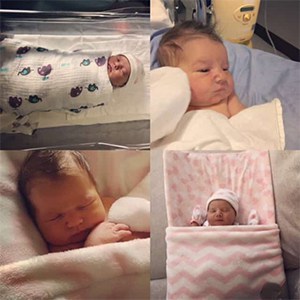
Found 3 top-rated clinics, had a consultation with each Doctor, and chose Dr. Silber. Him being a Pioneer in the Fertility world gave me full confidence in going that route. He was amazing in our initial discussions and the planning, didn’t offer false hope, but based on facts and his Mini IVF protocol, we all thought that there is a chance. That’s all I needed to hear.
We did 3 Mini IVF rounds over 1 year, and I ended up with 9 embryos. On our 2nd transfer of just one blastocyst, I received the best news ever…Pregnant at the age of 45! :) 40 weeks later I gave birth to a perfect, healthy little girl! A true Miracle really, and all thanks to the most wonderful Dr. and all his knowledge and expertise! We will be forever grateful!!!
This 43 year old couple was told by every clinic they would have to use donor eggs, but they did not want donor eggs and were able to get pregnant using mini-IVF with her own eggs, and they now have two healthy babies (twins) and want to tell their story:
Dear Dr. Silber and Staff,
I wanted to write and thank you for making Mother’s Day 2010 one of the best days of my life. We celebrated with our amazing two-month-old twin baby girls and we wanted to extend our sincerest gratitude for helping us realize our dream to become parents.
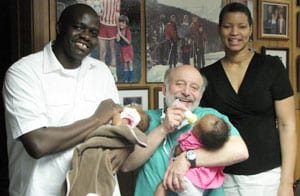
We were both well over 40 and every doctor told us there was NO CHANCE. We soon found that local doctors were not willing to ‘work with us’ because of my age 43. We changed doctors 3 times and they all prescribed the same conventional treatments and tests.
This went on for a whole year while I was just getting even older. We finally figured out these doctors were trying to waste enough time to force us into using donor eggs, rather than pursue a plan that would help us try to have our OWN children. We realized that using donor eggs is a viable option for some couples but had told each doctor from the beginning that was not what we wanted. I was devastated when I realized they had basically wasted 11 precious months of our time!
Then we saw Dr. Silber. I figured if Dr. Silber was that good at thinking outside of the box, he could help a healthy 44 year old become a mother. I ‘googled’ and found out the office was only a four and a half-hour drive away.
We believe that God works through people and we had a feeling we were in the right place when we noticed a ‘promise’ displayed on the wall that said Dr. Silber would work to the best of the ability God had given him to help people. Dr. Silber explained to us the odds of conceiving because of my age, now 44, but he also had a plan to give us a chance. Things seemed to keep telling us we were on the right track.
July 6th we found out we were pregnant. July 21st we found out it was twins! WOW!! I was treated like any other ‘normal’ high-risk pregnancy because of my ‘advanced maternal age’ of 44 and carrying twins. I had a very healthy pregnancy and made it to 39 weeks with what my OB described as a pregnancy better than most of her moms carrying ‘singletons’. We had beaten the odds.
Our very healthy and alert baby girls were born well after my 44th birthday on March 8th! They continue to amaze us each day as we watch them grow and change. Brielle and Lillian bring such joy to our lives and we have not stopped smiling. We are so blessed.
We cannot thank you enough for your willingness to extend your expertise to successfully treat the infertility issues which older couples face.
Forever Grateful,
Dr. Dan & Lorelei Andedo
Rock Island, Illinois
Reasons for our remarkable success in women over 40 using mini-IVF
There are several reasons for the remarkable success in our cases of older women using this approach. Firstly, it is hard to There are several reasons for the remarkable success in our cases of older women using this approach.
Firstly, it is hard to overstate how crucial is the purity of air quality in the lab as well as in the operating room. There are organic volatile toxins in the air everywhere in microscopic quantities that don’t seem to affect our wellbeing. But they do dramatically affect the wellbeing of these highly exposed embryos. Secondly, the very clever Japanese approach to minimal stimulation allows us to retrieve just as many (or few) eggs from older women as more expensive massive dosing conventional stimulation protocols, but better-quality eggs and at a lower cost.
Finally, the ability to freeze the embryos with impunity and then transfer in a later cycle where the uterine lining is more perfectly synchronized to the stage of embryo development than during a stimulated cycle, all adds up to better success rates in challenging cases.
We can sometimes even achieve pregnancies in women 46 years of age and older with this approach (although donor eggs is a much more sure technique for achieving a successful result for such cases).
Read our main article on the Mini-IVF procedure
47 year old obtains last remaining eggs with Mini-IVF
A striking example of how mini-IVF with back-to-back cycles to store up vitrified embryos can allow older women to get pregnant and have babies with their own eggs is a couple from the north-central area of the U.S. who first saw us a year earlier, both 47 years old.
He had had a vasectomy 20 years earlier as a young man and had not decided till this late age finally, after 12 years of happy marriage, that they both really wanted a child. I told them we could easily restore his fertility with a vasectomy reversal or just retrieve his sperm microsurgically, but the problem was her age. Although I brought up donor eggs as the surest solution, they insisted on trying with her own eggs. So we reluctantly agreed to give it a try at age 47.
Her fiHer first mini-IVF cycle (using his retrieved sperm, of course) yielded just one egg, which resulted in a perfect looking embryo, which we froze. The next month another mini-IVF cycle yielded 3 eggs, which resulted in two more beautiful embryos which we also froze.
The following month, the next mini-IVF cycle resulted in just one empty follicle and no further embryos to freeze. She was completely out of eggs and we had managed to retrieve her last remaining eggs in the nick of time. A half a year later, at age 48, and completely devoid of eggs, we transferred these three beautiful frozen embryos. She had a healthy pregnancy at age 48 and delivered a healthy baby.
Another beautiful example is a 47-year-old woman who went so far as to store up 14 embryos with mini-IVF. She already now has two babies (with her own eggs) and still has four more frozen embryos with which she can try for a third baby despite now being almost 50 years old.
These cases of women over 46 getting pregnant with their own eggs are unusual, but it is nonetheless quite possible if donor eggs are not an option for them.
Of course, we always suggest donor eggs to older women as a much surer way of having a baby, and we are strong advocates for accepting donor eggs once a woman has run out of her own eggs. But with this mini-IVF approach of storing up vitrified embryos month by month in older women, we have a remarkable pregnancy rate even in women over 42 years of age of over 50%.
But it takes a great deal of patience on the part of the patient to retrieve just a few eggs at a time every month until enough embryos are banked to warrant thawing and transfer.
This principle can also apply to younger women who have very few remaining eggs who are suffering from premature ovarian failure. Most IVF centers will turn these women down if they do not agree to donor eggs, or else string them along with tests and meager treatments that are doomed to fail, until they finally agree to donor eggs.
Young woman overcomes prior health problem to start a family
We recently took care of such a case, a young woman I had known since she was a little girl, who had undergone multiple surgeries at We recently took care of such a case, a young woman I had known since she was a little girl, who had undergone multiple surgeries at various clinics for other health problems, but the result of her cure was just one remaining ovary with hardly any eggs left. In fact, she did not just want one baby, she dreamed of having a big family.
The misery this brave and beautiful young woman had to go through, being told by everyone that she could never have her own children, and her determination not to be swayed by the naysayers was truly inspirational. She went through a total of 6 cycles of IVF just to store up embryos, retrieving only a few eggs at a time, and eventually storing up 10 embryos.
This resulted in a healthy pregnancy and enough frozen embryos to eventually have the big family she always dreamed about.
There are many more such examples where persistence and mini-IVF can be successful with older couples or women with very few eggs. The advantage of mini-IVF is that we can get better quality embryos at a much lower cost per cycle, store them up safely with vitrification, and spend less than the conventional IVF cycles would cost. Nonetheless, some women simply will not have any viable eggs of her own, and then donor eggs become the only remaining option.
What If We Need An Egg Donor?
If a woman absolutely cannot get pregnant with her own eggs, then donor eggs is her only remaining option. Although not her first choice, it is nonetheless a very good option.
We have been offering donor egg IVF for over 33 years, and therefore have had a chance to follow these children and their parents for over a quarter-century. Both the children and the parents are well adjusted and completely happy with their lives because of the donor egg IVF.
In fact, these wonderful outcomes convince me that in the controversial nature vs. nurture debate, nurture is the clear winner. The reason it is so often misunderstood is that what appears to be ingrained character in a child is in truth, a subtle result of early interaction with parents in the first two or three years of life.
The character, personality, intelligence, and even coordination motor skills of the child are dependent on that emotional bonding and complex interaction with parents in the first few months and years. Couples who have to take their second choice, donor eggs, because they have run out of their own eggs, should not be forlorn. Donor eggs are a great option for them.
How does it work and how do you select an egg donor?
Many IVF programs just have a small local pool of egg donors, which we feel is not a favorable approach. We work with a variety of specialized donor agencies all around the U.S. as well as the best egg banks encompassing every geographic region and every ethnic and racial group to give the couple with ovarian failure the largest possible choice.
We do all the medical work and screening, but the infertile couple does the choosing based on detailed characteristics and appearance of the donor.
However, for psychological reasons, we feel it is best for both the donor and recipient to remain anonymous to each other, although an occasional couple will prefer a known donor. In either event, if you are forced by complete lack of any fertile eggs of your own, to use donor eggs instead, in the end you can feel quite comfortable that you can still have a very happy and fulfilling family.
Related Media
IVF Worked For Them – AOL Health
by Catherine Donaldson-Evans
Suzanne Gastineau got pregnant with her first baby so easily, it never occurred to her that a few years later, she would be trying to conceive her second for a year-and-a-half with no results.
The St. Louis-area resident and IT specialist was 38 years old when she had her son Kyle, now 6. At age 41, she was trying to get pregnant again, but nothing happened. After going to her ob/gyn and finding that the only thing affecting her was her poor quality eggs because of her age, she was put in the care of an infertility specialist and decided to undergo a special type of in vitro fertilization that works well for older women.
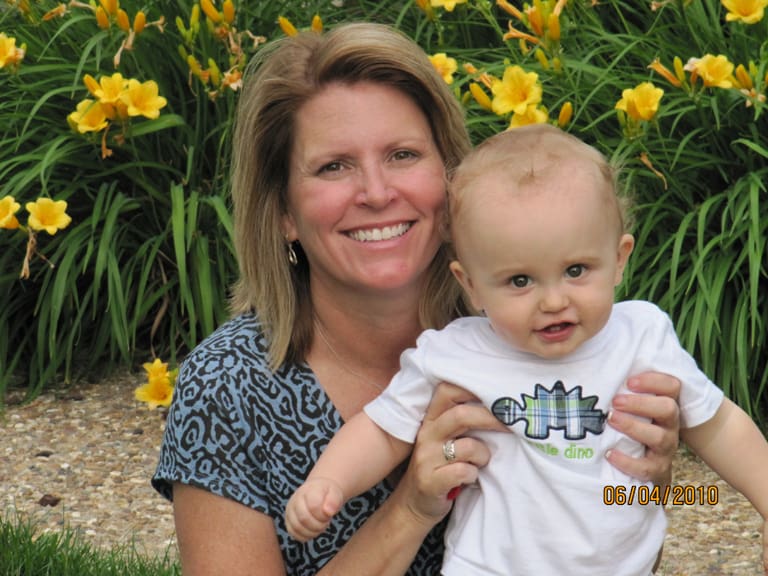
After two rounds of what her doctor and others refer to as “mini-IVF” — a cheaper, toned-down form of the procedure involving fewer drugs with lower dosages yielding fewer but better quality embryos, or fertilized eggs — Gastineau got pregnant with her second child despite the fact that she had only one viable embryo. Little Alex was born last August when his mom was 43 years old.
“I ended up with a gorgeous baby boy,” she told AOL Health. “He’s a little miracle patient. Personally, I’m a believer in mini-IVF.”
If you have any questions, you may call us at (314) 576-1400.