+1 (314) 576-1400


 Contact Us

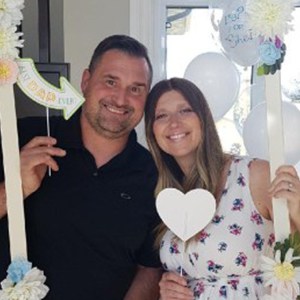
There are no words to express our gratitude to Dr.Silber, Dr.DeRosa and the whole team who made our dream come true! We started our pregnancy journey late in life, I was 40 and Hubby 38. After a year of no success, I tried 1 round of IVF at my local clinic and failed. The comments from my Dr. were “what did you expect at your age”! There was nothing wrong with either one of us, except for my age and my ‘old’ eggs. I decided to globally research all Dr.’s that have expertise dealing with IVF and woman over the age of 40. Found 3 top rated clinics, had a consultation with each Doctor, and chose Dr. Silber. Him being a Pioneer in the Fertility world gave me full confidence in going that route. He was amazing in our initial discussions and the planning, didn’t offer false hope, but based on facts and his Mini IVF protocol, we all thought that there is a chance. That’s all I needed to hear. We did 3 Mini IVF rounds over 1 year, and I ended up with 9 embryos. On our 2nd transfer of just one blastocyst I received the best news ever….Pregnant at the age of 45! :) 40 weeks later I gave birth to a perfect, healthy little girl! A true Miracle really, and all thanks to the most wonderful Dr. and all his knowledge and expertise! We will be forever grateful!!!
Infertile patients cannot afford to wait for treatment while their eggs get older.
Dr. Sherman Silber, Infertility Center of St. Louis, is offering video consultations for patients who need to plan now for their treatment while stay-at-home orders are in place. He is talking to and evaluating patients in their home to comply with social distancing measures.
Dr. Silber is discovering that patients actually prefer this method of telemedicine consultation over the conventional office visit. Patients have conveyed that “it is so much more convenient and less stressful” to have a telemedicine personal consultation than to take a day off from work to travel to the doctor’s office and sit with other nervous patients in the waiting room.
The COVID-19 pandemic is thus changing much of the way we will do things in the future, and for the better. “Our patients are surprisingly much happier with this approach. Of course, at some point we need to perform hands on treatment. But with this new manner of seeing patients, we can come to the right diagnosis and treatment plan for most patients more efficiently, quickly, and painlessly, with no loss of personal one-on-one communication.” This is a very welcome new era of telemedicine that has been forced on us by the current difficult times.