+1 (314) 576-1400


 Contact Us

So much can change in a year. At this time last year, in 2010, my husband and I had been told “by a different clinic that” we had a less than 10% chance we had less than a ten percent chance of IVF success. We had already tried three fresh IVF cycles and one frozen cycle; one ending in miscarriage, and the other three with no success. We were given very little hope but still knew we needed a second opinion.
Through our online research we kept being led back to Dr. Silber’s website. Acknowledging this as a sign, we made an appointment for a consultation. Within fifteen minutes into our consultation Dr. Silber told us that we had both been misdiagnosed. We were so thankful for and impressed with the level of Dr. Silber’s expertise. He apologized for what we had been through and told us he had a plan that he thought could be successful.
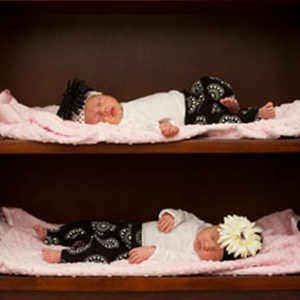
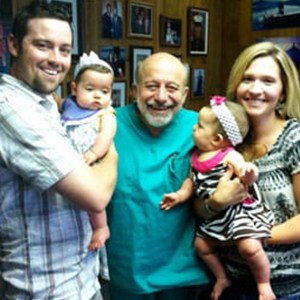
Dr. Silber was definitely right about our success. He and Dr. Pineda transferred two embryos on St. Patrick’s Day, March 17, 2010. Our two lucky charms! Exactly eight months later on November 17, our two beautiful girls were born at 37 weeks and 3 days weighing 5 lbs. 15 oz. each.
We cannot begin to thank Dr. Silber, Dr. Pineda, Karah, and the rest of the staff enough for everything they did to help bring our twin girls into the world. Our daughters are both truly miracles from God.
Infertile patients cannot afford to wait for treatment while their eggs get older.
Dr. Sherman Silber, Infertility Center of St. Louis, is offering video consultations for patients who need to plan now for their treatment while stay-at-home orders are in place. He is talking to and evaluating patients in their home to comply with social distancing measures.
Dr. Silber is discovering that patients actually prefer this method of telemedicine consultation over the conventional office visit. Patients have conveyed that “it is so much more convenient and less stressful” to have a telemedicine personal consultation than to take a day off from work to travel to the doctor’s office and sit with other nervous patients in the waiting room.
The COVID-19 pandemic is thus changing much of the way we will do things in the future, and for the better. “Our patients are surprisingly much happier with this approach. Of course, at some point we need to perform hands on treatment. But with this new manner of seeing patients, we can come to the right diagnosis and treatment plan for most patients more efficiently, quickly, and painlessly, with no loss of personal one-on-one communication.” This is a very welcome new era of telemedicine that has been forced on us by the current difficult times.