+1 (314) 576-1400


 Contact Us
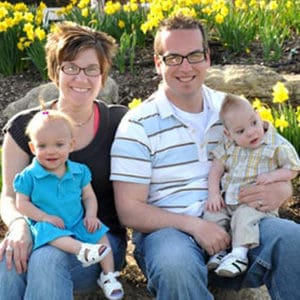
I want to start by saying that Dr. Silber and all his staff are Amazing! My husband and I knew since the moment we met we wanted children. So after we were married for a year we started talking about starting our family. We figure maybe a month later we would be pregnant then nine months later we would have our baby and live happily ever after. Well after about 5 months we started to get worried and started having tests done to find the problem but we were only looking at me. After a year Robbie decided to get checked and we found out that he was born with a blockage of the vas deferens. A friend of mine told me about Dr. Silber, so I decided that we would go talk to him and get more information. I was scared to talk to Dr. Silber, because I was afraid that he was going to tell us that we would never have children.
Dr. Silber made us feel so comfortable, he listened to our feelings and never once lead us to believe that he could do something that he couldn’t. Dr. Silber was very honest with us and reassured us that IVF would be the only way we would get pregnant. We loved that we never felt pressured into anything; we were given the facts and all the information and left to decide what we wanted.
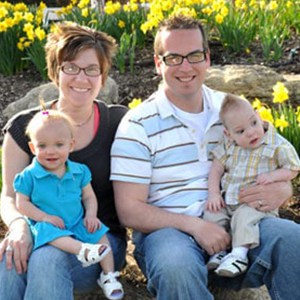
Thanks to Dr. Silber and his staff we have beautiful 20 month old twins.
Infertile patients cannot afford to wait for treatment while their eggs get older.
Dr. Sherman Silber, Infertility Center of St. Louis, is offering video consultations for patients who need to plan now for their treatment while stay-at-home orders are in place. He is talking to and evaluating patients in their home to comply with social distancing measures.
Dr. Silber is discovering that patients actually prefer this method of telemedicine consultation over the conventional office visit. Patients have conveyed that “it is so much more convenient and less stressful” to have a telemedicine personal consultation than to take a day off from work to travel to the doctor’s office and sit with other nervous patients in the waiting room.
The COVID-19 pandemic is thus changing much of the way we will do things in the future, and for the better. “Our patients are surprisingly much happier with this approach. Of course, at some point we need to perform hands on treatment. But with this new manner of seeing patients, we can come to the right diagnosis and treatment plan for most patients more efficiently, quickly, and painlessly, with no loss of personal one-on-one communication.” This is a very welcome new era of telemedicine that has been forced on us by the current difficult times.