+1 (314) 576-1400


 Contact Us
Randy and I were married when I was just 18 and at that time I did not care that he had had a vasectomy. It was actually a relief. When I hit 30, however, my biological clock started ticking and as I got older its sound was growing louder to the point that I could not ignore it anymore. Being in Italy, we contacted a local hospital to find out what our options were. We were naive and very hopeful, so we got on the list and waited for a year and a half to do our first ICSI. Because of the vasectomy, at the hospital they took some samples from my husband’s testicles and froze some semen. The first time we did the ICSI (January 2004) the fertilized oocytes stopped multiplying after 6/8 hours; the second time (September 2004) we had 3 beautiful embryos but a negative pregnancy test; the third time (July 2005) we had 2 poor quality embryos.
At this point I realized that this was the wrong way to pursue this. I felt that the doctors and geneticists were not experienced enough and I had had enough hormones and drugs. At the US military base I had gotten from the library Dr. Silber’s book, “How to Get Pregnant” and, since I was home resting after the last unsuccessful embryo transfer, I began to read it. When I got to the vasectomy section and how it did not matter how long the vasectomy reversal had been done (in my husband’s case 27 years and since everybody that we had contacted were talking about antibodies produced against a man’s semen) I was elated. I read this part to my husband, who (to my shock) actually said he was willing to have a reversal. I write “to my shock” because his vasectomy had been very painful (no anesthesia had been used during the procedure) and it had always been a sore subject to him before.
Anyway, when he said he was willing I contacted Dr. Silber’s office around 20th July of 2005 and the following 7th September the procedure was done in St. Louis.
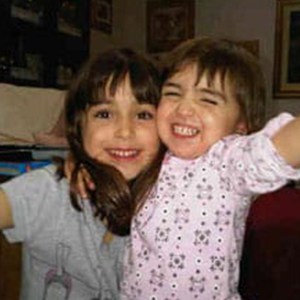
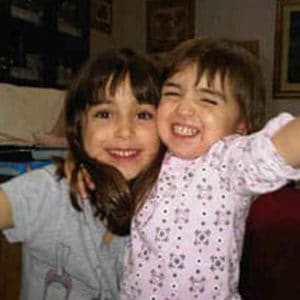
We had no way of knowing what Dr. Silber would find during the operation, but despite the fact that the vasectomy had been sloppy, the reversal (thanks to Dr. Silber’s enormous ability as a microsurgeon) was a complete success. We followed Dr. Silber’s recommendations (rest, sitz baths, jock strap) and even with a flight from St. Louis back to Italy, Randy (by now 53) healed very well. In February I had unusual bleeding between two periods and contacted my gynecologist (with whom we had done the ICSI procedures) and after a few blood tests, I (by now 37) was told that my ovaries were getting old and that my uterus was inflamed. I got a series of medicines to take as soon as I finished my following period and that was all we needed, because on May 10 we got a positive pregnancy test. Our daughter Francesca was born on Christmas day 2006: perfectly healthy at 6 lbs 8 oz and 20 inches long. It was great to have been able to have a baby “the old fashioned way” and always felt blessed. When Francesca was 2 years old I thought that we could have a second baby. We had a few setbacks, so we could not “get to it” right away, but in summer of 2009 we started. I’ve always followed Dr. Silber’s recommendations: having sex every other day with the woman on her back and stay there for 30 minutes. It took us 3 months and in the beginning of October we got another positive pregnancy test. June 7 2010 (I was 41 and my husband 58) our daughter Emma was born: another perfectly healthy baby, although chunkier (8 lbs 10 oz and 21 inches long). What a perfect outcome.
Infertile patients cannot afford to wait for treatment while their eggs get older.
Dr. Sherman Silber, Infertility Center of St. Louis, is offering video consultations for patients who need to plan now for their treatment while stay-at-home orders are in place. He is talking to and evaluating patients in their home to comply with social distancing measures.
Dr. Silber is discovering that patients actually prefer this method of telemedicine consultation over the conventional office visit. Patients have conveyed that “it is so much more convenient and less stressful” to have a telemedicine personal consultation than to take a day off from work to travel to the doctor’s office and sit with other nervous patients in the waiting room.
The COVID-19 pandemic is thus changing much of the way we will do things in the future, and for the better. “Our patients are surprisingly much happier with this approach. Of course, at some point we need to perform hands on treatment. But with this new manner of seeing patients, we can come to the right diagnosis and treatment plan for most patients more efficiently, quickly, and painlessly, with no loss of personal one-on-one communication.” This is a very welcome new era of telemedicine that has been forced on us by the current difficult times.