 +1 (314) 576-1400


 Contact Us

Doctors Say More Ovary Transplants Possible
New techniques make more ovary transplants possible, may help women fight biological clock
By MARIA CHENG AP Medical Writer,
LONDON June 29, 2009 (AP)
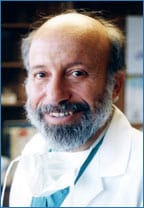
A new technique to preserve and transplant ovaries might give women a better chance to fight their biological clocks and have children when they are older, doctors announced Monday.
In the past, scientists have performed ovarian transplants in women with cancer, since chemotherapy often causes infertility. Doctors typically take out patients’ ovaries before the toxic treatment begins and then reimplant them later.
Because of the cost and uncertainties involved — only a handful have been done successfully — this was thought only worthwhile for women with serious diseases who had few options.
Now, recent advances to preserve ovaries and surgically implant them could make the procedure more widely available, helping women avoid fertility problems as they age. Many women are now delaying having a family until their 30s or 40s, when fertility problems become more common.
Women in their 20s or 30s could theoretically have an ovary removed and frozen, and then have it reimplanted years later when they are ready to have children.
“We are in the middle of an infertility epidemic,” said Dr. Sherman Silber, director of the Infertility Center of St. Louis in Missouri, one of the experts behind the research. “With these new techniques, we could dramatically expand our reproductive lifespan.”
The research was reported at a meeting of the European Society of Human Reproduction and Embryology in Amsterdam.
Silber and colleagues studied how many eggs were lost or preserved in fresh and frozen ovarian tissue of young women before they had cancer treatment. The doctors found no difference in the number of viable eggs in fresh ovary tissue compared to ovaries frozen using a new ultra-fast “vitrification ” technique.
“All of this research is a step in the right direction,” said Pasquale Patrizio, of Yale University, who performs ovary transplants but was not connected to either study. “If we really have these techniques under control, maybe we can spread this technology to many more women.”
“This is not an experimental procedure for cancer patients anymore,” Silber said. “The question is whether more women should be able to have this option.”
See also:
...