+1 (314) 576-1400


 Contact Us

Is tubal reversal or Mini IVF better for pregnancy?
A common dilemma many women face if they’ve previously had a tubal sterilization and now wish to have more children is whether they should undergo a microscopic tubal reversal or Mini IVF. At the Infertility Center of St. Louis, we are masters at microsurgery to reverse a tubal ligation, but actually, for most patients, the better option is Mini IVF.
How do you decide between tubal reversal or Mini IVF?
Our success rate with microsurgical tubal reversal is about 95%. We actually were the first to develop this procedure in the U.S., and therefore we possibly have the most experience with it now in the world.
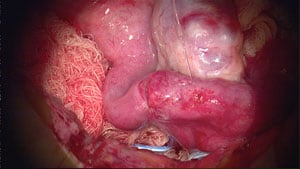
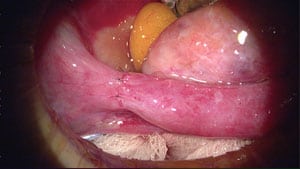
The fallopian tube is a tiny passageway that begins at the fimbrial end, where the egg is picked up from the surface of the ovary, and leads through a microscopic opening into the uterus. As long as the fimbrial end has not been destroyed, we can achieve excellent micro-anatomical reconnection.
However, if a large amount of the tube was destroyed by your original sterilization, your chance of pregnancy is related to the length of the tube. If at least one-half of the tube has been removed or destroyed (if there is a short length of tube remaining), the chances for pregnancy will be low. As the amount of tubal length diminishes, the chance of pregnancy diminishes despite an accurate reconnection.
It is technically possible to connect the relatively large diameter near the fimbriated end to the tiny, almost invisible, cornual end. However, it is important to microscopically tailor such a reconnection to be as smooth as possible. This minimizes the risk of “ectopic” pregnancy, which occurs when the egg, which is fertilized in the tube, gets stuck at the site of reconnection instead of passing into the womb to begin its growth into a baby. This risk is greatest when the site of reconnection is not a smooth, even transition.
What does the Infertility Center of St. Louis recommend for getting pregnant after tubal ligation?
We have performed over 12,000 microsurgical operations to reverse sterility in men and women, after developing these exacting microsurgical techniques on over 2,000 laboratory rats. It requires this kind of extensive practical experience to obtain the best results.
Despite our well-known expertise in these microsurgical tubal reversal operations, for most women in the modern era, mini-IVF is the better alternative. Let me explain why. There are several reasons we recommend Mini IVF when women ask if they should choose tubal reversal or Mini IVF:
- Many women who wish to have babies after having had tubal sterilization are in their late 30s or 40s. As a woman gets older, the number of her eggs goes down, and the baby rate per egg (the fertility of each egg) also decreases. As a result, despite having a properly reconnected tube, they still are not getting pregnant and need Mini IVF anyway.
- Insurance does not pay for tubal reversal surgery, and the hospital costs have become much higher than the cost of Mini IVF.
- Mini IVF is non-surgical and should therefore be easier for you.
- Nowadays, most gynecologists are removing the entire tube when they do a tubal reversal. In the modern era, there is nothing left to reconstruct, and the only alternative is Mini IVF.
Dr. Sherman Silber would be happy to perform a meticulous microsurgical tubal reversal surgery for you if you feel that is the best approach, and our results remain excellent. However, for all the reasons above, and explained in the video, you may prefer to do Mini IVF with us. I would, of course, be happy to consult with you on this issue, so contact us today for an appointment.





If you have any questions, you may call us at (314) 576-1400.
Click Here to Learn More about Tubal Reversal Cost and How to Arrange for Surgery.
Click Here to Learn More about Tubal Ligation from Chapter 15 of Dr. Silber’s book, “How to Get Pregnant“.
How is the tubal reversal surgery done?
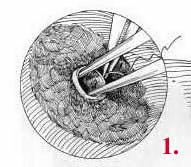
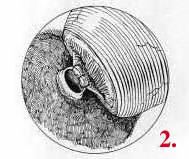


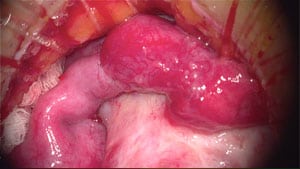
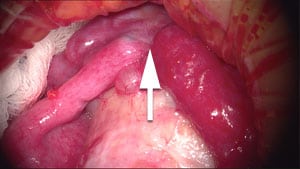
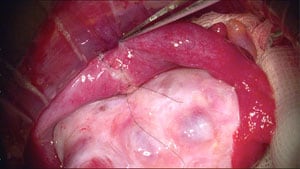
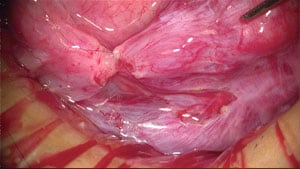
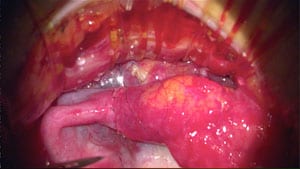
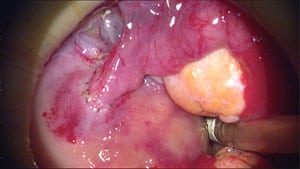
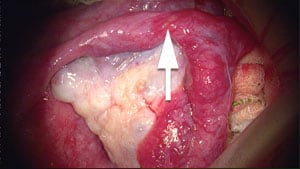
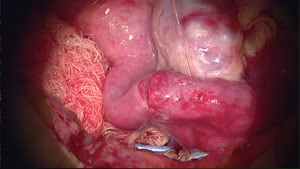
Atlas of photo micrographs of tubal ligation procedures